

Iconic Diners That Defined the American Dream
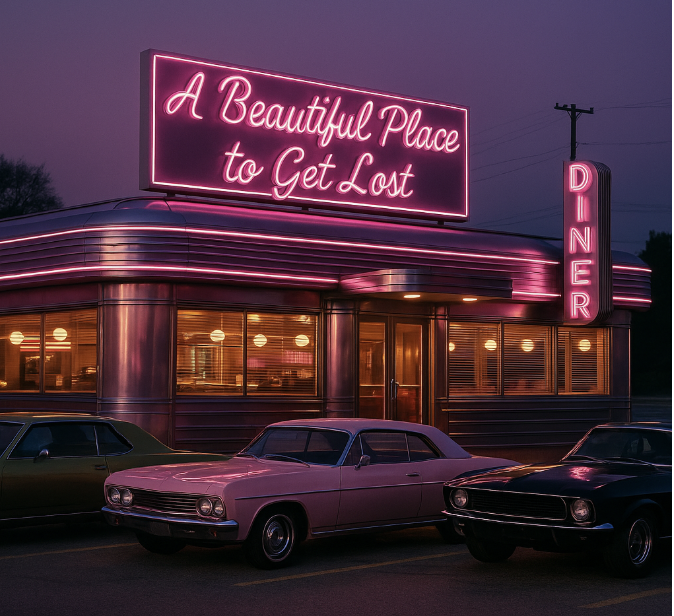
There’s something about an American diner that feels like a time capsule of an entire nation’s subconscious. A curb side love affair that cements scenes to get lost in, where love stories start, where jukeboxes soundtrack heartbreak, where the best movie scenes have captured our stares from the screen and where booths still hold the echo of a million late-night conversations. For me, diners don't just embody the true essence of what Americana aesthetic stands for, they give me that giddy sense of nostalgia - they give me the space to get lost in a dream of my own making.
Because it's Friday & this week hasn't been my favourite to date, I've decided I deserve a big dose of serotonin and hopefully you'll get a hit from me sharing some of my most converted curation of diners.
Mel’s Drive‑In | San Francisco, Los Angeles & the Universal Studios replicas
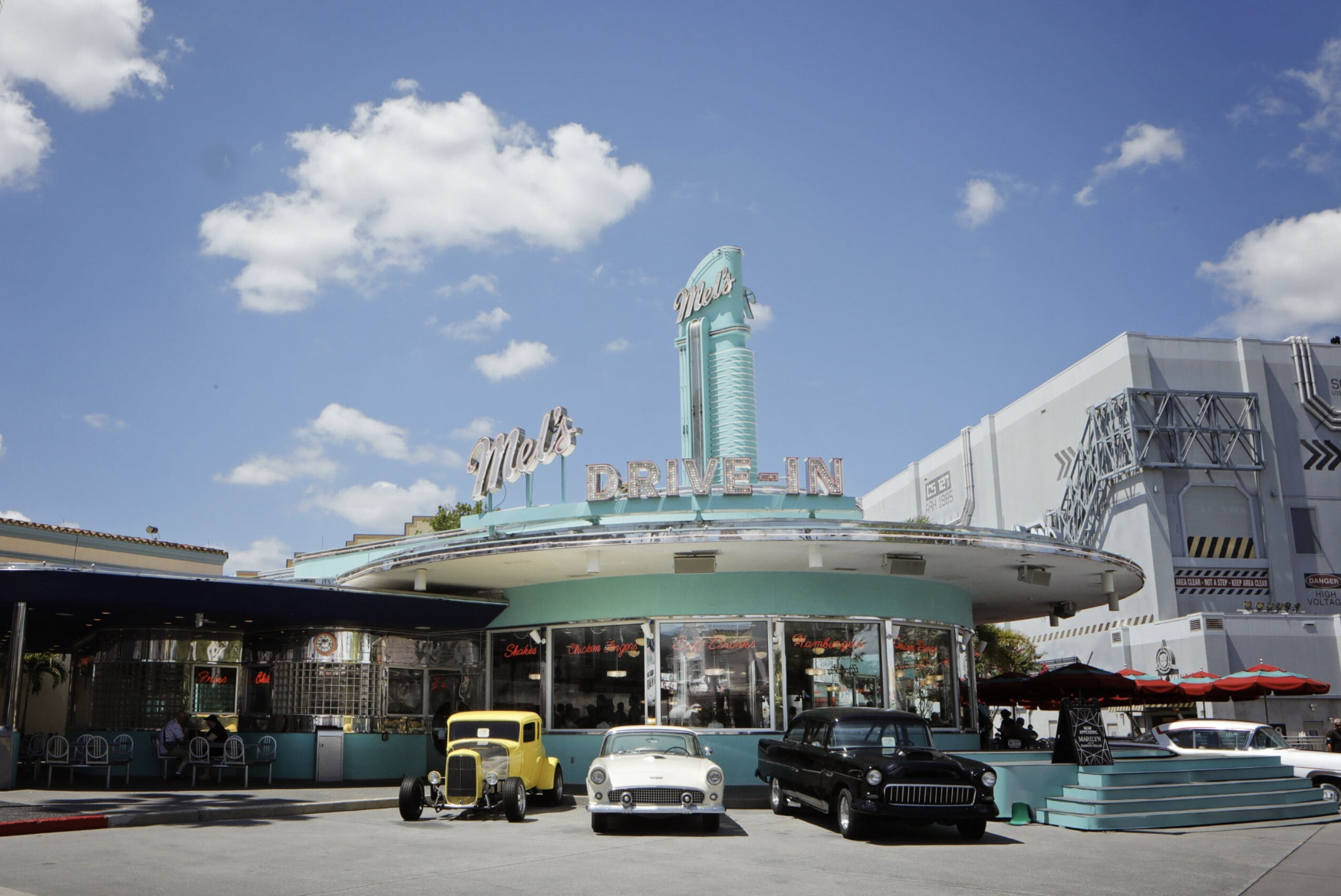
Opened in 1947 by Mel Weiss and Harold Dobbs on Van Ness Avenue, Mel’s is one of the earliest adopters of Googie architecture, think neon signs, glass walls, and sleek rooflines made to catch the eye of passing drivers. It helped popularise carhop service, with servers bringing milkshakes and burgers directly to your car. Its cinematic life began when George Lucas shot American Graffiti there in 1973 (with its iconic pastel booths and chrome counters), and it later appeared in Grease. Today, both the original locations and Universal Studios replicas carry that vintage-chrome energy into a new generation.
Peggy Sue’s 50’s Diner | Yermo, CA

(Photo: 2018 Michelle Juergen)
Built in 1954 from railroad ties and mortar sourced from the nearby Union Pacific rail yard, Peggy Sue’s was reopened in 1987 by Peggy Sue and Champ (a couple who met working in showbiz) with an ambitious vision: preserve its original 1950s charm and layer in memories. Today, the diner is full of authentic movie and TV memorabilia, served in themed rooms beneath a giant jukebox entrance. There’s even a “Diner‑Saur Park” out back complete with larger-than-life metal dinosaurs to keep the vibe playful and surreal. It still feels like stepping into a cinematic roadside memory on Route 66.
Miss Albany Diner | Albany, NY (now closed)
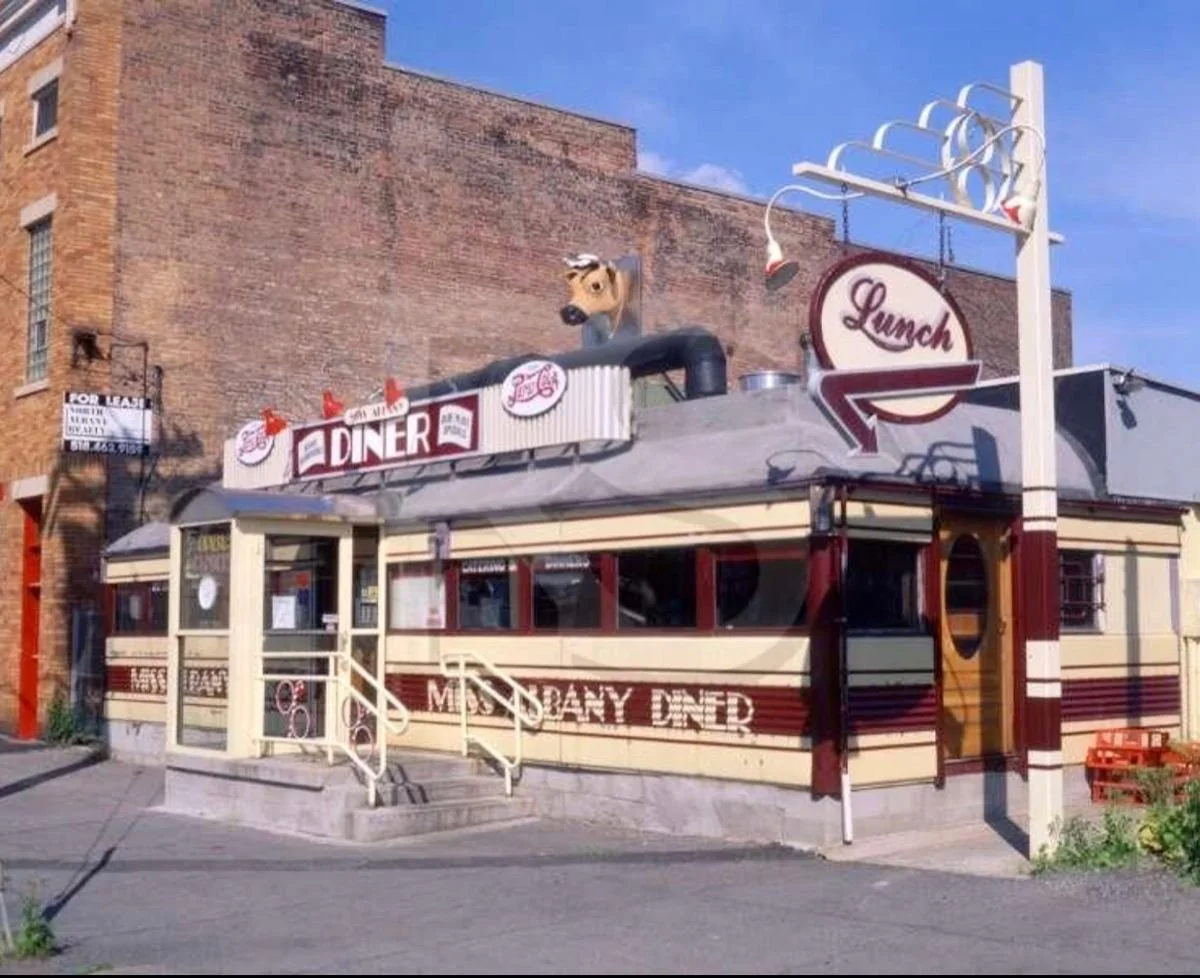
(Photo via Pinterest - please contact for credit to be updated)
Originally a 1929 lunch cart serving factory workers, the Miss Albany Diner as we know it was built in 1941, a Silk City model made by Paterson Vehicle Company, one of the key players in prefab diner design. It still holds its porcelain enamel shell, cherry wood interior, and geometric Art Deco tilework, a rare, near-original pre-WWII survivor. It’s not just architectural heritage; it’s visual canon. Ralph Goings immortalised it in photorealist detail in 1993. And if it feels cinematic, that’s because it is - Jack Nicholson and Meryl Streep shared a scene here in Ironweed (1987). Not just a diner, it’s American memory in steel and neon.
Bob’s Big Boy Broiler | Downey, CA

(Image: https://www.bigboy.com/)
Originally opened in 1958 as Harvey’s Broiler, this landmark is a masterclass in Googie architecture all exaggerated angles, glass panels, and a swooping cantilevered roof that feels like it’s in motion. Designed by architect Paul B. Clayton, it embodied the postwar obsession with futurism, freedom, and the open road. In 2007, it was partially demolished in a rogue teardown, sparking public outcry and one of the most passionate preservation campaigns in California diner history. Rebuilt and reimagined as Bob’s Big Boy Broiler in 2009, it now serves as both a working diner and a cinematic staple spotted in Mad Men, Grease 2, One Hour Photo, Mission: Impossible 2, and more.
Kroll’s Diner | Fargo, ND

Opening as Kroll’s Kitchen in 1968 and transitioning into its current retro-diner format in the mid‑’90s, Kroll’s was designed with classic stainless‑steel cladding, neon accents, and formica counters to echo 1950s charm.
Mickey’s Diner | St. Paul, MN
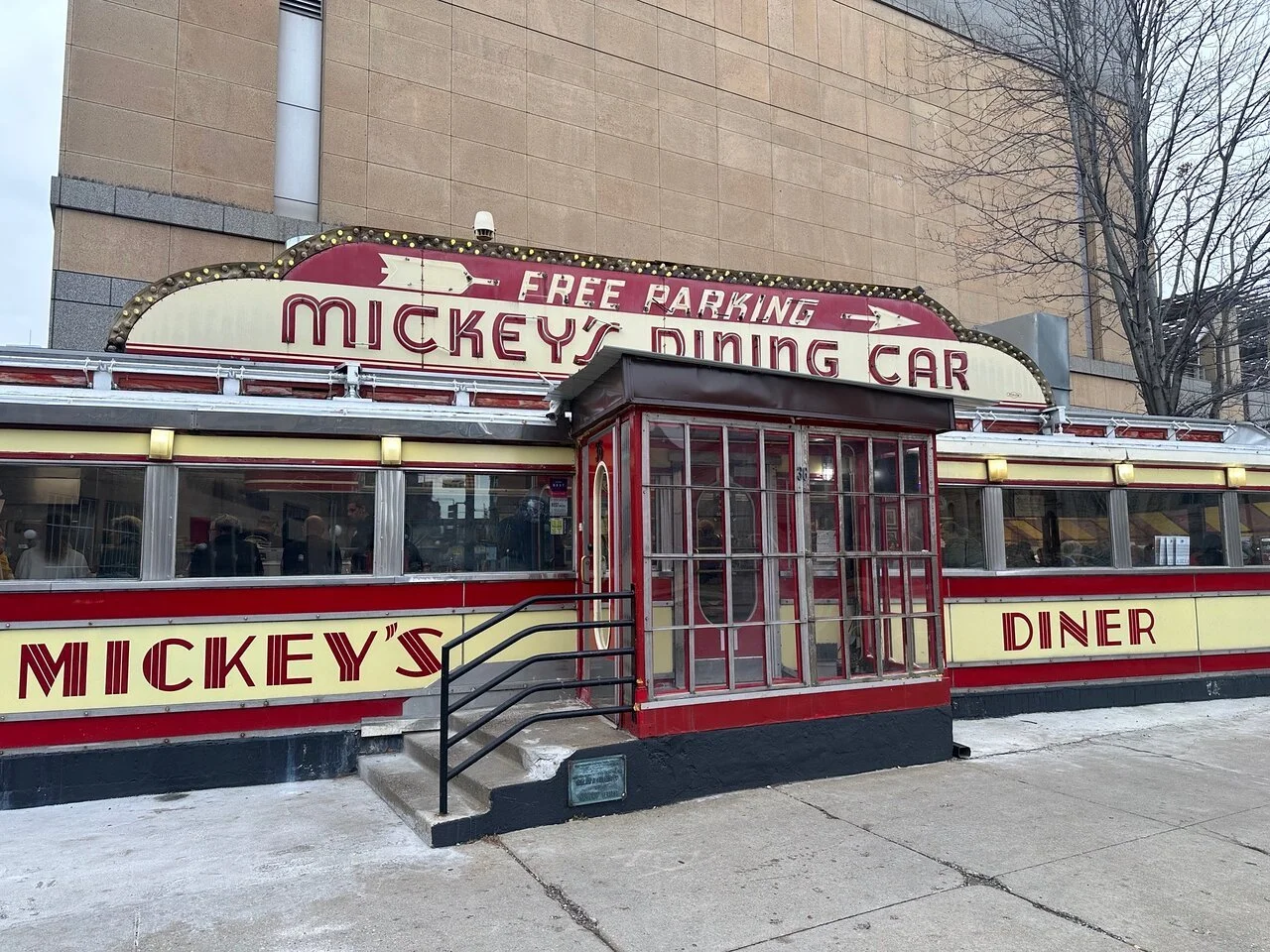
(Photo via Pinterest - please contact for credit to be updated)
